


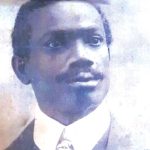
Jacob Wilson-Sey
-
- January 20, 2025

Born in Biriwa, Gold Coast on the 10th of March 1832, into the Akona Ebiradzi family of Anomabu-Briwa-Moree and Cape Coast. Jacob Wilson-Sey was better known by his nickname Kwaa Bonyin. This name was earned because he had a great sense of humour. He was not sent to school, coming from humble beginnings with his father Paapa Saah, a carpenter and Maame Abadua, his mother a farmer. He took to carpentry to learn additional skills. His mother out of her limited resources, gave him the sum of £7 with which he bought a parcel of land on the outskirts of Biriwa to farm. He also began to tap palm wine to supplement his income, also making palm oil and coffins. His coffin business did well because of his exceptional wit.
His acquisition of wealth is akin to the story of Alladin’s treasure cave. This made Wilson-Sey a multi-millionaire and one of the wealthiest men in Africa. Whilst looking for good palm fruits, Sey is said to have gone to a farm one night when the village was sleeping. He was a staunch Methodist and apparently usually sang Methodist hymns whilst walking to the farm, but this time, he is said to have only said a short prayer. When he arrived at the farm, he climbed a palm tree on top of a hill and spied a snake coiled around the tree and coming towards him. In a panic, he fell and lost consciousness when he landed on the ground. Whilst in this state of unconsciousness, it is said that a voice instructed him to “wake up and go in peace and therefore show love and kindness to the needy.” When he woke up, he saw a shiny item in the dark and found out that it was a gold nugget. There were other pots as well with gold dust. He got the treasure to his house before sunrise, and it is estimated that the gold he found was worth about £200 billion today. Wilson-Sey became an overnight celebrity, he stopped wearing local clothes and donned Victorian tailcoats, silk trousers and a fedora. He was now addressed as Jacob Wilson-Sey Esq.
Jacob Wilson-Sey became the co-founder and first President of the Aborigines Rights Protection Society and funded the whole trip including the hiring of the ship the Alba to London for officials who went to England to present a petition signed by about eighty traditional rulers, opposing the Land Bill of 1897. The Bill, if it had been legalised, would have made indigenes of Ghana lose land ownership. The organisation had legal aid from Edward F. Hunt, a solicitor from Sierra Leon as well as the London based law firm Messrs Ashurst Crips Co and a Mr Corrie. The delegation was successful and returned to the Gold Coast with a missive signed by the Queen, Victoria. After this success, Jacob Wilson-Sey used the rest of his live to help improve other lives particularly that of the people of Cape Coast. With the assistance of John Mensah Sarbah, they lobbied with the colonial administration to have built, a railway line in Cape Coast to enhance trade. The colonial government gave conditions that were difficult to execute. They asked for the native farmers from Cape Coast and the Central Province to produce an annual cocoa output of two tonnes within a set time. It was impossible although Wilson-Sey and Sarbah put in personal monies to stimulate the growth of cocoa and palm oil. The new wharf at Sekondi changed the dynamics and commerce in Cape Coast slowed down. This saw the movement of prominent barristers and merchants leaving to live in Accra, Axim and Takoradi. Wilson-Sey bought a number of old buildings in Cape Coast offering them rent free to bring back some activity into Cape Coast. He also provided funds for the return of exiled chiefs such as Elmina’s Kobina Gyan and Prempeh from the Seychelles. He did a lot for the Methodist church in Cape Coast, renovating church buildings, purchasing choir robes, hymn books and church organs. He also supported other churches in Cape Coast. Wilson-Sey was married to Agnes Charlotte Amba Kosimah Morgue and his descendants include Jacob Ewusi Wilson Sey, Jacon Panyin Wilson-Sey, Jacob Kakra Wilson- Sey, Victoria Ewusiwaa Wilson-Sey and Jacob Nii Otto Wilson-Sey.
He passed away aged 70 in 1902. A school in Cape Coast, The Jacob Wison-Sey School was named after him.
Reference: Legend Ghana by Stephen Opoku Tontoh ISBN 978-9988-1-3522-5 and Wikipedia
